You already know your gut does more than break down your lunch. It’s the foundation of your well-being. Your gut helps support your immune system, your skin, and even your mental wellness. All tracing back to the trillions of good bacteria that call your gut home.
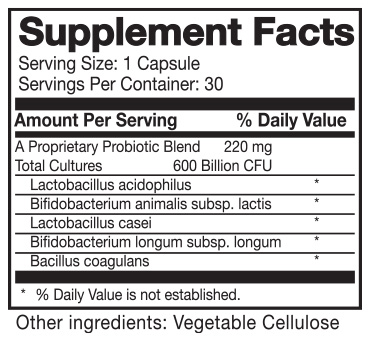
The Life’s Abundance Probiotic starts there — helping you maintain a healthy and balanced gut microbiome, so you can enjoy smooth digestion, comfort and regularity. It uses a carefully selected, five-strain probiotic blend that delivers 600 billion CFUs of gut-loving bacteria per serving.
Each strain has a job to do — and together, they’ve got your whole gut covered:
- Lactobacillus acidophilus — the workhorse strain, supporting a healthy digestive environment and the nutrient absorption that makes everything you eat actually count
- Lactobacillus casei — supports the gut's intestinal barrier integrity and microbial balance across the full length of the digestive tract
- Bifidobacterium animalis subsp. lactis — supports regularity and the kind of digestive balance that's easy to take for granted until it's not
- Bifidobacterium longum subsp. longum — supports microbiome balance in the lower gut, the part we only think about when bloating and discomfort strike
- Bacillus coagulans — a naturally spore-forming strain that protects itself against stomach acid, supporting digestive balance and comfort all the way through
Here's what you'll find in every bottle:
- 600 Billion CFUs per serving — a high-potency formula that feeds your gut beneficial bacteria for daily microbiome support
- Multi-strain, whole-gut support — a carefully selected five-strain blend, each working a specific role to support your total gut health
- 24-month shelf life — guaranteed 600B CFU for two years, no refrigeration needed
Clean, concentrated formula — packed with active probiotic strains, no unnecessary fillers
- Simple, daily routine — take one small, easy-to-swallow capsule
Life's Abundance Probiotic is a simple, daily investment in your well-being — 5 strains, 600B CFU and enhanced survivability that gets them where they need to go. It’s a little capsule with a whole lot of guts.
 CAUTION:
- Do not take if seal is broken
- Keep out of reach of children.
- As with any supplement, if you are pregnant, nursing, have a medical condition or taking medication, consult your health practitioner before use.
Lactobacillus acidophilus
Lactobacillus acidophilus supports lactase activity. This probiotic helps support a balanced environment in the small intestine and creates an unfriendly environment for bad bacteria. It adapts well to the human body because of its human origin and is acid- and bile-resistant for intestinal survival.
Bifidobacterium animalis subsp. lactis
Present in the body throughout all stages of life, this widely studied probiotic supports gastrointestinal health. Having a high proportion of bifidobacterium in the gut is broadly considered to be beneficial for immune and digestive health. Bifidobacterium animalis subsp. lactis tolerates digestive conditions extremely well and helps deliver beneficial bacteria to the digestive tract.
Lactobacillus casei
Found throughout the digestive tract, Lactobacillus casei helps to support the integrity of the intestinal barrier and microbial balance. It also aids in the breakdown of complex carbohydrates, helping support nutrient absorption and creating an environment that's less hospitable to undesirable bacteria.
Bifidobacterium longum subsp. longum
This probiotic strain converts different types of sugars into lactic acid via fermentation, helping to lower the pH in the lower intestine. It helps support a balanced intestinal environment through the natural fermentation process.
Bacillus coagulans
Unlike many conventional probiotic strains, Bacillus coagulans form a natural protective spore that helps it survive stomach acid and arrive in the intestines intact. Once there, it germinates and gets to work — producing lactic acid, supporting a balanced gut environment and digestive comfort throughout the gut.
Aren't the best probiotics refrigerated?
Advances in technology have resulted in several viable shelf-stable strains. Shelf-stable products provide an alternative to products that rely on proper refrigeration to maintain their efficacy during shipping, storage and retail shelf life.
Why should I choose non-GMO foods?
GMO stands for Genetically Modified Organisms. Genetic modification is a technique that alters living cells to produce new chemicals and functions in plants and animals. Many food scientists question the safety of genetically modified foods because they do not know if eating GMO foods over a lifetime can damage our health.
What is vegan?
A vegan is a person who does not eat or use animal products.
What does "gluten free" mean and why is it important?
Gluten is a protein found in certain grains including wheat, barley and rye. It's the sticky protein that gives
bread dough its elastic quality.
A gluten-free diet is crucial to people with celiac disease because it is the only known treatment for this
autoimmune digestive disease. People with celiac cannot digest gluten, which causes inflammation in the
digestive system and affects the small intestine's ability to absorb nutrients from food. Symptoms of
celiac disease include diarrhea, bloating, fatigue, and anemia.
People with gluten sensitivity have similar symptoms to those with celiac disease but test negative for it as well as wheat allergies. These people may feel fatigued, depressed, bloated and have abdominal pain.
Gluten free grains include rice, corn, quinoa and buckwheat.
I have noticed “soy free” foods lately and I want to know if soy products are unhealthy?
Soy is one of the top food allergies, especially among babies and children. Symptoms of soy allergy are typically mild, although anaphylaxis is possible. People avoiding GMOs may avoid soy since more than 90% of soybeans grown in the U.S. are genetically modified.
Soy can disrupt thyroid function which may lead to hypothyroidism and thyroid problems.
Soy contains phytoestrogens, compounds that mimic human estrogen.
Is eating dairy free healthy?
People may go dairy free if they are lactose-intolerant, have a milk allergy or are vegan.
People with lactose intolerance do not have the enzyme lactase which helps to digest milk and they can experience diarrhea, nausea, bloating and cramps when eating dairy products.
Milk allergies, one of the top 8 food allergies, occur minutes or hours after having milk or milk products and can cause hives, wheezing, vomiting, diarrhea and cramps.
People may also avoid dairy for ethical reasons or believe it helps keep their skin clear.
Sugar is a natural ingredient so why do I care if there’s no sugar added?
Eating too much sugar has been linked to inflammation throughout the body. It is important to check labels since manufacturers frequently add sugar to many products that you would not think of as sweet, such as pasta sauces, chicken nuggets, cured meats, and ketchup. Also, sugar comes in many forms such as cane syrup, high fructose corn syrup and crystalline fructose.
What’s wrong with artificial colors?
Artificial colors may cause hyperactivity and behavioral changes in children.
What’s wrong with artificial preservatives?
Some artificial preservatives have been linked to increased risks for illnesses.
What are the manufacturer’s credentials?
This dietary supplement is manufactured by a company that is a GMP-certified and FDA-regulated facility in the USA.